Malta
Europe
Key facts
- Capital
- Valletta
- Population
- 579,704
- 2025
- Area
- 315 km²
- Official languages
- Maltese, English
- Currency
- Euro
- EUR
- GDP per capita
- US$47,907
- 2025
- Dual citizenship
- Allowed
- Dual citizenship has been permitted in both directions since 10 February 2000.
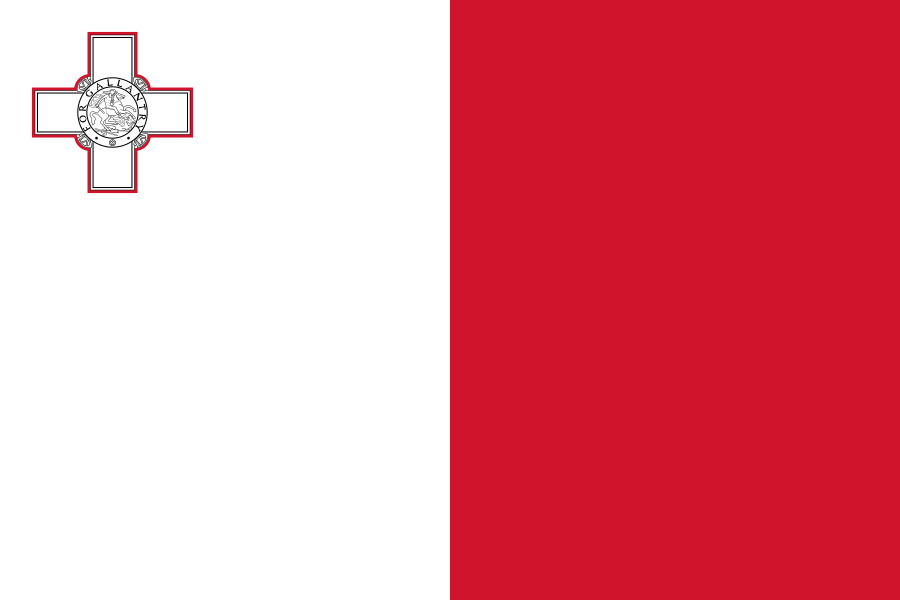
Malta (Europe) has data on 11/14 Prosperous Intelligence indices. Strongest relative position: Passport Index — #5/198 (95.2/100). Lowest relative position: Cost of Living Index — #136/200 (59.4/100). The passport ranks #5/198 and reaches 200 destinations without a consular visa in advance. Global Citizenship Score 81.6/100 (#19/199). On the entry side, 92/197 passports can enter Malta without a consular visa in advance. The dataset records 6 active citizenship and residence programmes in Malta.
Scores on 11 indices
- Health & Longevity75.9
- Safety & Stability89.8
- Economy & Income87.9
- Education78.7
- Environment & Clean Water71.1
- Infrastructure91.3
- Digital Connectivity83.9
- Equality72.1
- Learning Quality72.3
- Educational Attainment87.6
- Expected Years of Schooling83.5
- Education Spending70.7
- Basic Access81.1
- Violent Crime99.3
- Stability & Absence of Terrorism84.2
- Law Enforcement & Order71.8
- Road Safety93.1
- Absence of Armed Conflict100.0
- Health Outcomes96.4
- Coverage & Access94.4
- Health Workforce & Facilities61.2
- Spending & Investment52.8
- Financial Protection59.4
- Personal Income Tax82.0
- Capital Gains & Dividends100.0
- System & Incentives84.0
- Net Wealth Tax100.0
- Inheritance & Gift Tax100.0
- Corporate & Social Security24.0
- Rule of Law & Property Rights62.1
- Political Stability84.2
- Institutions & Regulation65.1
- Financial Soundness64.0
- Monetary Stability81.6
- Freedom of Capital Movement100.0
- Education78.7
- Healthcare75.9
- Safety89.8
- Quality of Life80.7
- Cost of living59.4
- Passport95.2
- Passport95.2
- Quality of Life80.7
- Safety89.8
- Healthcare75.9
- Purchasing power & price stability66.1
- Education78.7
- Wealth Protection73.7
- Tax84.0
- Cost of living59.4
- Healthcare75.9
- Safety89.8
- Quality of Life80.7
- Tax84.0
- Wealth Protection73.7
- Affordable Prices49.9
- Price Stability81.6
- Purchasing power62.2
Monthly living costs
- Total incl. rentUS$1,947Rank 13 of 24 countries researched; #1 is the cheapest
- Total excl. rentUS$379Rank 6 of 24 countries researched; #1 is the cheapest
- Housing & utilitiesUS$1,626Rank 15 of 24 countries researched; #1 is the cheapest
- Core food basketUS$116Rank 19 of 24 countries researched; #1 is the cheapest
- A fixed basket of 15 everyday items at online retail prices; not a household’s full food spending.
- Eating outUS$165Rank 12 of 24 countries researched; #1 is the cheapest
- TransportUS$0Rank 1 of 24 countries researched; #1 is the cheapest
- Internet & mobileUS$40Rank 4 of 24 countries researched; #1 is the cheapest
- 2 adults, 2 primary-school children
- Total incl. rentUS$2,895Rank 8 of 24 countries researched; #1 is the cheapest
- Total excl. rentUS$878Rank 5 of 24 countries researched; #1 is the cheapest
- Housing & utilitiesUS$2,141Rank 9 of 24 countries researched; #1 is the cheapest
- Core food basketUS$371Rank 19 of 24 countries researched; #1 is the cheapest
- A fixed basket of 15 everyday items at online retail prices; not a household’s full food spending.
- Eating outUS$330Rank 12 of 24 countries researched; #1 is the cheapest
- TransportUS$0Rank 1 of 24 countries researched; #1 is the cheapest
- Internet & mobileUS$54Rank 5 of 24 countries researched; #1 is the cheapest
- International school (reference)US$1,170Rank 4 of 24 countries researched; #1 is the cheapest
- 3 schools, US$654–US$1,763 a month; not included in the totals
At a glance
Entering Malta
- Visa-free: 92 passports
- Visa on arrival: 0 passports
- eTA: 0 passports
- e-Visa: 0 passports
- Consular visa required: 105 passports
Regional position and data sources
- First in Europe on 0/11 indices
- Above the regional median on 7/11 indices
- Each index lists its source and data date on the Data sources page
Citizenship and residence programmes in the dataset
- Self-employment residence (Jobsplus licence + Identità)
- Malta Citizenship by Merit (Citizenship Act Cap. 188, Art. 10(9), Act XXI of 2025)
- Nomad Residence Permit
- and 3 more programmes
Frequently asked questions about Malta
What is the capital of Malta?
The capital of Malta is Valletta.
What is the population of Malta?
According to the World Bank, Malta had a population of 579,704 in 2025.
What are the official languages of Malta?
The official languages of Malta are Maltese and English.
What currency does Malta use?
Malta uses the Euro (EUR).
Does Malta allow dual citizenship?
Dual citizenship has been permitted in both directions since 10 February 2000.
How strong is the Malta passport?
The Malta passport ranks #5 of 198 on Prosperous Intelligence’s Passport Index and reaches 200 destinations without applying for a consular visa in advance (visa-free, visa on arrival or eTA).
How many destinations require a visa for Malta passport holders?
Holders of the Malta passport must apply for a consular visa before travelling to 16 destinations and need an e-Visa for 31. Full list: Malta passport page.
How many passports can enter Malta without applying for a visa in advance?
92 of 197 passports can enter Malta without applying for a consular visa in advance: 92 visa-free. 105 must apply for a consular visa.
What citizenship and residency programmes does Malta offer?
The Prosperous Intelligence dataset records 6 active citizenship and residency programmes in Malta: Self-employment residence (Jobsplus licence + Identità), Malta Citizenship by Merit (Citizenship Act Cap. 188, Art. 10(9), Act XXI of 2025), Nomad Residence Permit and 3 more. Details: Opportunity Map.
What is the minimum investment for residency or citizenship in Malta?
In Malta, Malta Startup Residence Programme requires a minimum investment of US$27,000, Malta Permanent Residence Programme (MPRP) requires starting from US$107,000 and Malta Retirement Programme (MRP) requires US$297,000 (reference USD conversion).
How long does an application take in Malta?
In Malta, an application under Nomad Residence Permit takes about 1–2 months, Malta Permanent Residence Programme (MPRP) about 4–8 months and Malta Retirement Programme (MRP) about 3–6 months (reference processing time).
How long does it take to become a citizen of Malta through these programmes?
Malta Citizenship by Merit (Citizenship Act Cap. 188, Art. 10(9), Act XXI of 2025) grants citizenship directly (reference time).
How many days a year do you need to spend in Malta?
In Malta, Malta Permanent Residence Programme (MPRP) requires 0 days of physical presence a year (reference figure).
Can family members join programmes in Malta?
Family members included: Self-employment residence (Jobsplus licence + Identità): spouse and children under 18; Malta Citizenship by Merit (Citizenship Act Cap. 188, Art. 10(9), Act XXI of 2025): spouse; Nomad Residence Permit: spouse, children under 18 and unmarried dependent adult children.
Where is Malta strongest and weakest in Prosperous Intelligence’s indices?
Relative to other countries, Malta is strongest on the Passport Index (#5 of 198) and weakest on the Cost of Living Index (#136 of 200).
How does Malta rank for quality of life?
Malta scores 80.7/100 on Prosperous Intelligence’s Quality of Life Index, ranking #33 of 211.
Is Malta expensive to live in?
Malta scores 59.4/100 on Prosperous Intelligence’s Cost of Living Index, ranking #136 of 200. This is the affordability-of-living-costs score: a higher score means lower prices.
How safe is Malta?
Malta scores 89.8/100 on Prosperous Intelligence’s Global Safety Index, ranking #31 of 203.
How does Malta rank for healthcare?
Malta scores 75.9/100 on Prosperous Intelligence’s Healthcare Index, ranking #29 of 192.
How does Malta rank for education?
Malta scores 78.7/100 on Prosperous Intelligence’s Education Index, ranking #35 of 191.
What the profile contains
- Key facts from government and international sources
- Scores and global ranks on 11 Prosperous Intelligence indices
- Entry rules, passport strength and residency programmes
Why the profile matters
- Compare one country across many criteria on a single page
- Not a substitute for legal, tax or investment advice
Method
- How each index is scored and weighted
- The limits of the data and how to check official sources